
Ensuring a customer-centric approach to accessibility strategy at AIB
Published
Contributor
Tilting the Lens
Format
- Text
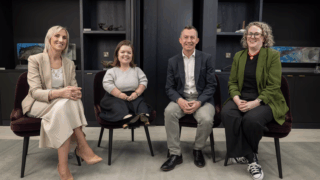
Ahead of the European Accessibility Act (EAA) coming into law in June 2025, Tilting the Lens has been partnering with one of Ireland’s largest retail banks to ensure readiness for the harmonised accessibility standards to be applied across the organisation and its services.
Allied Irish Banks (AIB) is one of Ireland’s leading financial services providers, offering personal, business, and corporate banking through an extensive national branch network and a rapidly evolving digital infrastructure.
Over the last year, Tilting the Lens has collaborated closely with AIB to support the development and implementation of a bank-wide accessibility strategy. This work contributes directly to AIB’s implementation of the European Accessibility Act (EAA)—EU legislation that sets harmonised accessibility standards for key services, including banking, that came into effect on June 28th 2025.
“AIB has the largest branch network in Ireland and with 3.35 million customers, we want to ensure our products and services are as accessible as possible. This is a journey we are committed to getting right. With the support of Tilting the Lens, we are working hard to ensure we are constantly improving our accessibility. The insights, strategy and training Sinéad and her team have provided are invaluable.”
— Geraldine Casey, Managing Director of Retail Banking, AIB
Strategic collaboration
Our work together focused on three primary areas:
1. Research informed by disabled customers
Tilting the Lens led a comprehensive programme of qualitative and quantitative research to better understand the priorities and barriers experienced by disabled customers using both AIB’s services and banking services in general. These insights were integral to shaping the bank’s strategy and guided practical improvements.
2. Enhancing digital products and services
Working with AIB’s teams and disabled developers, Tilting the Lens supported the creation of digital accessibility guidelines for developers and product teams, and improvements to the bank’s websites, mobile app, and online platforms. Updates were designed to improve functionality for assistive technologies—such as screen readers, keyboard-only navigation, and voice input—bringing AIB’s platforms more in line with EAA requirements.
3. Staff training and organisational development
Training was delivered to AIB’s senior leaders, product teams, frontline colleagues, and a Townhall held to engage the entirety of the business. The sessions focused on embedding accessibility into everyday practices, strengthening understanding of inclusive design, aligning business objectives to accessibility outcomes, and building accountability into the internal culture with accessibility principles.
“We are particularly proud of the breadth and depth of our partnership with AIB. The success of this work was made possible by the investment of time, openness and consistency across multiple teams. Accessibility is not a one-off fix—it’s a long-term responsibility that begins with listening and leads to better systems for everyone.”
— Sinéad Burke, CEO and Founder, Tilting the Lens
Ongoing AIB initiatives
In parallel to the work led by Tilting the Lens, AIB undertook a number of additional initiatives as part of its broader accessibility strategy. These included:
- A partnership with AsIAm, Ireland’s national autism charity, which led to Autism Friendly Accreditation across all 170 AIB branches—introducing sensory-friendly spaces, quiet rooms, sensory kits, and customer support training.
- Upgrades to AIB’s ATM and lodgement networks to include voice guidance functionality, supporting visually impaired customers with accessible, self-directed banking.
While Tilting the Lens was not involved in these specific initiatives, they contributed to the wider effort of making AIB’s services more accessible, and underlines the importance of cross industry and cross community collaboration.
This partnership communicates the value and potential outcomes that can be created when accessibility is resourced and implemented as a strategic priority. It reinforces the reality that accessibility is not a fixed state, or static entity. It’s ever-changing, evolving and iterating, to ensure we leave no one behind.
Further Reading