Contact Tilting the Lens for a Consultation
Want to embed accessibility into your brand’s storytelling and media production? Our team is here to help.

British Vogue
May 2023
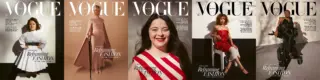
On 20 April 2023, with close collaboration from Tilting the Lens, British Vogue launched ‘Reframing Fashion’: a portfolio edition highlighting disability justice, accessibility, equity, intersectionality and pride, with Sinéad Burke as Consultant Editor. In an historic first for the magazine the May 2023 edition was available in a Braille and audio version, making the magazine more accessible to many.
The edition featured five different covers, each starring an influential disabled changemaker: Selma Blair, Ellie Goldstein, Justina Miles, Aaron Rose Philip and Sinéad herself.
The edition not only featured photoshoots and interviews with its five cover stars, but a number of other disabled talent and advocates, including comedian Rosie Jones, racing driver Nicolas Hamilton, and barrister Jessikah Inaba, who recently made history as Britain’s first blind Black woman to be called to the Bar.
Test Transcript
Fashion has historically tended to overlook certain groups or communities, and disabled people are no strangers to exclusion within the industry. In recent years, there has been a growing conversation about disability inclusion in fashion: adaptive clothing brands are finally gaining mainstream recognition, and each year we are seeing more disabled models walking the runways.
In 2019, it felt like a breakthrough when Tilting the Lens Founder and CEO Sinéad Burke became the first visibly disabled person to star on the front cover of British Vogue. Yet, Sinéad knew that her work was far from over: was this a moment, or the beginning of a movement? More importantly, who would be the next disabled person on the cover of Vogue?
Fast forward a few years, and Sinéad and the team at Tilting the Lens are sitting in Edward Enninful’s office at Vogue House. British Vogue wanted to discuss their ambition to “reframe fashion from a disability perspective,” and Tilting the Lens were exploring how we might be able to support the magazine throughout this process, as “ongoing facilitators of learning and education.”
Above all, British Vogue wanted to “unpick, unlearn and really learn alongside disabled people what a more accessible issue would look like, both in terms of the physical issue itself and the ways in which you could create safe spaces for disabled people to engage in the process.”
Tilting the Lens supported the British Vogue editors, marketers, operations, digital and wider teams by providing insights and actionable advice, ensuring that the lived experience of disabled people and better practices in accessibility were at the heart of this edition.
We curated the talent and writers for the issue, held a digital accessibility workshop for the wider team, and advised on overall strategy and rollout for the edition. And for the shoots themselves we created a checklist to scout out the most accessible studios, and ensured the experience on set was equitable for everyone involved.
Accessibility was embedded into every step of bringing the issue to life, from planning and production through to printing and publication. The team at Tilting the Lens had many conversations with British Vogue about the word “accessibility,” because often, says Sinéad, “accessibility means different things to different people.” Usually, accessibility is equated with compliance and legislation, and the word is seen as synonymous with wheelchair access.
Want to embed accessibility into your brand’s storytelling and media production? Our team is here to help.

