
Hi there, I’m Emma Shaw. I am a Senior Consultant leading on Community and Impact at Tilting the Lens.
My work is focussed on advancing and celebrating disabled talent, while helping clients connect with amazing disability-led organisations. I work on projects that centre around community-driven research, from interviews to focus groups, along with advising on disability strategies and creating tailored accessibility workshops for teams across departments.
This work is important to me because I care about people and the unique perspectives they bring. It might sound a bit simplistic, but I love getting to know individuals, learning from their experiences, and finding ways to collaborate that celebrates their talents. Everyone deserves to be valued and included, and I’m committed to creating spaces that make this possible.
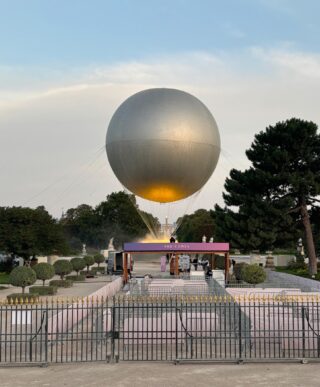
During the incredible Paralympic Games in Paris 2024, I had the privilege of participating in a truly gratifying event. It not only celebrated the power of sport, but also highlighted something even more important: Disability Innovation and the lasting impact that continues long after a city hosts the Paralympic Games.
Now, I know what you’re probably thinking – the Paralympics are old news, they happened a while ago. So, why the late recap? Well, there are two reasons. Firstly, I’m dyslexic, and the thought of writing anything longer than an email tends to make me break out in a sweat. I’ve been learning to embrace it, but it’s still a challenge I work through. Secondly, like many of you, I’m figuring out how to balance work and life with the rollercoaster of parenting, which doesn’t always leave much time for reflection. But back to Paris…
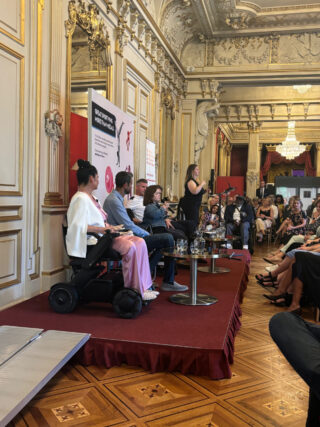
In the British Ambassador’s Residence, 150 research and business leaders were invited to attend a panel discussion, before having the opportunity to network and discuss disability, innovation and strengthening the global network of those championing disability justice.
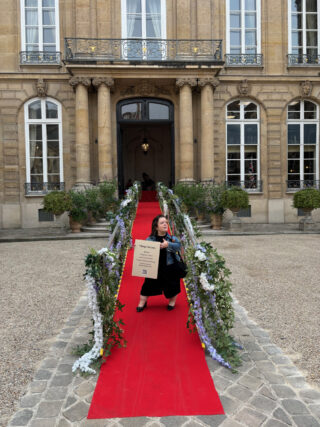
This was my first working event since welcoming my daughter, and it was also my first time travelling since her birth. I won’t lie – I initially didn’t want to go. Before pregnancy, I began taking medication to manage my mental health condition, which was an important step in caring for myself. But returning to work after maternity leave felt like starting a new chapter, and in many ways, I came back a slightly different version of myself.
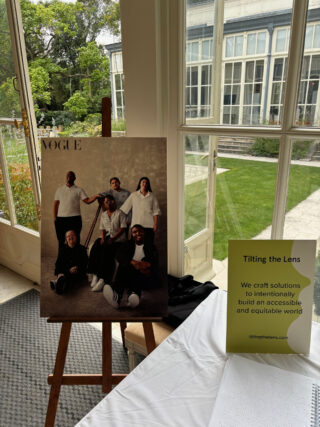
Being in Paris for the Paralympic Games ended up being so energising, and it was about much more than just the games – it was about connecting with people, sharing experiences, and feeling part of something bigger. This was the first time Tilting the Lens had its own stand at an event like this, showcasing blown-up images from British Vogue’s May 2023 Disability-focused issue, a physical Braille edition of the magazine, and large-print information with QR codes linking to our work. We had thought-provoking conversations about accessibility in cities worldwide, policy change, inclusive events, and innovative tech solutions. It was a significant milestone for us as a company, giving us a moment to reflect on the progress we’ve made and sparking new ideas for pushing boundaries and driving even more creative solutions for the future.
Making Connections
The opportunity to meet so many incredible disabled people in-person was a genuine privilege. One of those individuals was Emily Flores, a trailblazing Mexican-American journalist and the founder and editor-in-chief of Cripple Media. Emily created the platform as a space for disabled youth to share their stories and perspectives, challenging stereotypes and changing the narrative around disability in the media. Her work is something I’ve long admired, as it amplifies underrepresented voices and creates opportunities for young disabled people to engage in journalism and storytelling on their own terms.
We also had the pleasure of connecting with Keely Cat Wells, the co-founder and CEO of Making Space, an organisation dedicated to improving access and inclusion for disabled people in the entertainment industry. Keely’s advocacy focuses on creating space—literally and metaphorically—for disabled talent in film, television, and the arts.
The Panel Discussion
The panel was chaired by Global Disability Innovation (GDI) Hub’s CEO, Iain McKinnon. I first met Iain in August 2022 in Edinburgh when he was the Director of Inclusive Design. Our CEO and Founder Sinéad Burke and I truly enjoyed getting to know him and discovering more about the incredible work that GDI Hub does. Supporting this event, especially in light of his recent appointment as CEO, felt particularly meaningful for us.
During the panel conversation, John McFall shared how vital sports are in the rehabilitation journey after a life-changing illness or injury. With his own story of amputation, John became a Paralympic sprinter, a doctor specialising in trauma and orthopaedics, and now an astronaut. Sinéad, our CEO, discussed the need to ‘unlearn’ preconceived notions and highlighted the importance of diverse leadership and inclusivity for everyone’s benefit, including the areas of:
- Transforming the way companies approach recruitment, onboarding, and employment processes, implementing accessibility from the start.
- Systematic change and disabled people in leadership positions.
- Education, training and financial support to ensure disabled people are getting opportunities in the design industry.
Christophe Debard, head of ProtoSpace and founder of the Humanity Lab, talked about helping employees volunteer their skills to create meaningful solutions that change lives. His journey after life-changing surgery showcased the incredible innovations that can come from volunteer efforts.
Finally, Cara Elizabeth Yar Khan, a passionate and brilliant disability advocate with humanitarian experience from the United Nations. With her lived experience of myopathy, adds a powerful new voice as part of the Global Disability Innovation Hub team.
LA 2028
The strong representation from the LA Cultural Council and the LA City Council underscored the importance of planning and implementing access solutions well in advance. With the Paralympic Games moving to LA in just under four years, starting the conversation early is crucial. It’s not just about meeting current standards but about embracing the challenge of improving upon the learnings from previous games.
There was a real energy at the event: it was filled with enthusiasm, proactivity, and a shared commitment to progress. We felt lucky and humbled to see leaders and advocates come together, eager to collaborate on innovative solutions that ensure a more inclusive experience for everyone.
As I reflect on our time in Paris and look ahead to the upcoming games in LA, I can’t help but feel excited about the potential for change. Leaving loved ones behind for work can stir up anxiety for many of us. The challenge of balancing responsibilities at home with the call to participate in important initiatives is something many parents and carers face. However, being part of a journey that seeks to create a more inclusive and accessible future is incredibly meaningful. Witnessing so many people coming together to contribute to a legacy that embodies these values, reminds us all of the importance of collaboration and shared purpose in making a difference.
Some of the access implementations during Paris 2024:
- Audio description service was made available via the Olympics app, allowing attendees to listen through their personal smartphones and headsets, with live commentary in both French and English.
- Paris 2024 provided support for people who are Blind and low vision by providing a touch-sensitive tablet for Football, Rugby and Basketball games, that not only shows the position of the ball live but also letting them feel the intensity of the game through a vibration system.
- One of the legacies of the Paralympics for Paris is the creation of 17 ‘augmented accessibility zones’ in neighbourhoods across the city, where priority routes have been rethought in order to provide a more accessible, obstacle-free journey from one municipal facility – like a library, museum or sports centre – to another. Among other things, that meant repairing cracked pavements, widening sidewalks, repainting pedestrian crossings, clearing paths and removing unnecessary obstacles, installing audible pedestrian signals, and improving warning and guide strips.
- One of the biggest pain points for the city of Paris and Olympic organisers was the city’s transportation offerings. In 2021, only one in two bus stops were able to accommodate accessibility ramps. Three years, €22 million, and 380 urban restructuring projects later, all but two of the city’s 61 bus lines (line 40 and the Roissybus), and 1750 bus stops are accessible to wheelchair users and those with reduced mobility, while the tram is also fully accessible. The city says the Games accelerated the changes, and that they achieved in three years what would otherwise have taken up to 20 years.
Other Resources
Beyond function: a conversation on how alt-text becomes art
- Category:
- Past Events
- Webinars
- Format:
- Text
- Video